

Citizen Scientists Count Endangered Black Shama
Filipinos can do more than merely trek and camp in the forests – they can help count birds too, all for a good cause. Twice a year, the Sil…
Filipinos can do more than merely trek and camp in the forests – they can help count birds too, all for a good cause. Twice a year, the Sil…
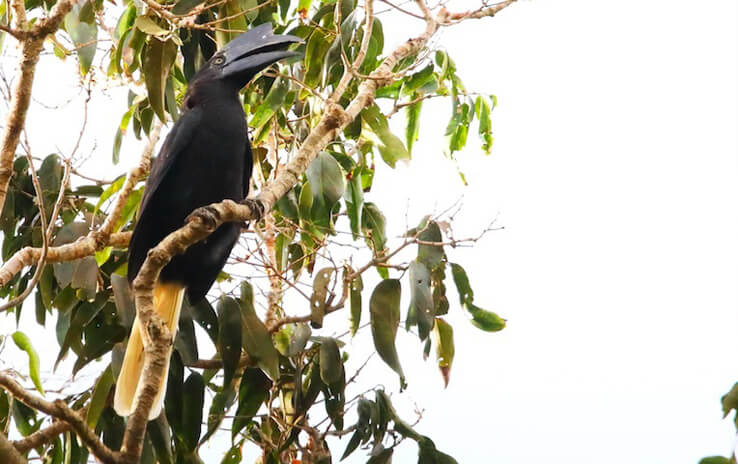
In the southernmost part of the Philippines are clusters of smaller islands recognized as global biodiversity hotspots: Sulu and Tawi-Tawi arch…

Six hundred forty-seven Citizen Scientists joined the Synchronized Bio-monitoring and Hornbill Count from March 2017 to December 2019 in four…

Brynx Junil Alegarbes represented his Alma Mater, Negros Occidental High School, in the annual Negros Occidental Wildlife Quiz Bowl from 2016 – 2…

Watch PhilBio LIVE ONLINE as we talk about our latest exciting discoveries, scientific findings and conservation lessons. . Together with our partners, we will be sharing new updates on the critically endangered Sulu Hornbill.

PhilBio continues to network with mandated agencies, local environmental groups and local government units in key sites with globally threatened species receiving less conservation attention.

Our recent fieldwork in the island of Negros, Philippines resulted in the discovery of a species new to science, Amyema lisae (Loranthaceae), and a new…

PhilBio provides integrated multi- disciplinary programmes that is based on sound science i.e. field research, developing local conservation site models, biodiversity awareness and appreciation, biodiversity friendly enterprises, on-site conservation and capacity building.

PhilBio is in the quest to conserve globally threatened species receiving less conservation attention in key conservation sites Philippines biodiversity through partnerships with different stakeholders and communities, local government and line agencies, academe, private corporations and individuals.

Started in 1990 as the Philippine Biodiversity Conservation Programme (PBCP) to assist the implementation of key priority recommendations arising from surveys, and much wider-ranging, threatened endemic species and habitat studies conducted.